
Dust, pollen, pet dander, smoke and other airborne particles can all circulate through a home, and most of us spend a great deal of time indoors. Your HVAC system plays a role in the air you breathe, so here are four ideas related to it.
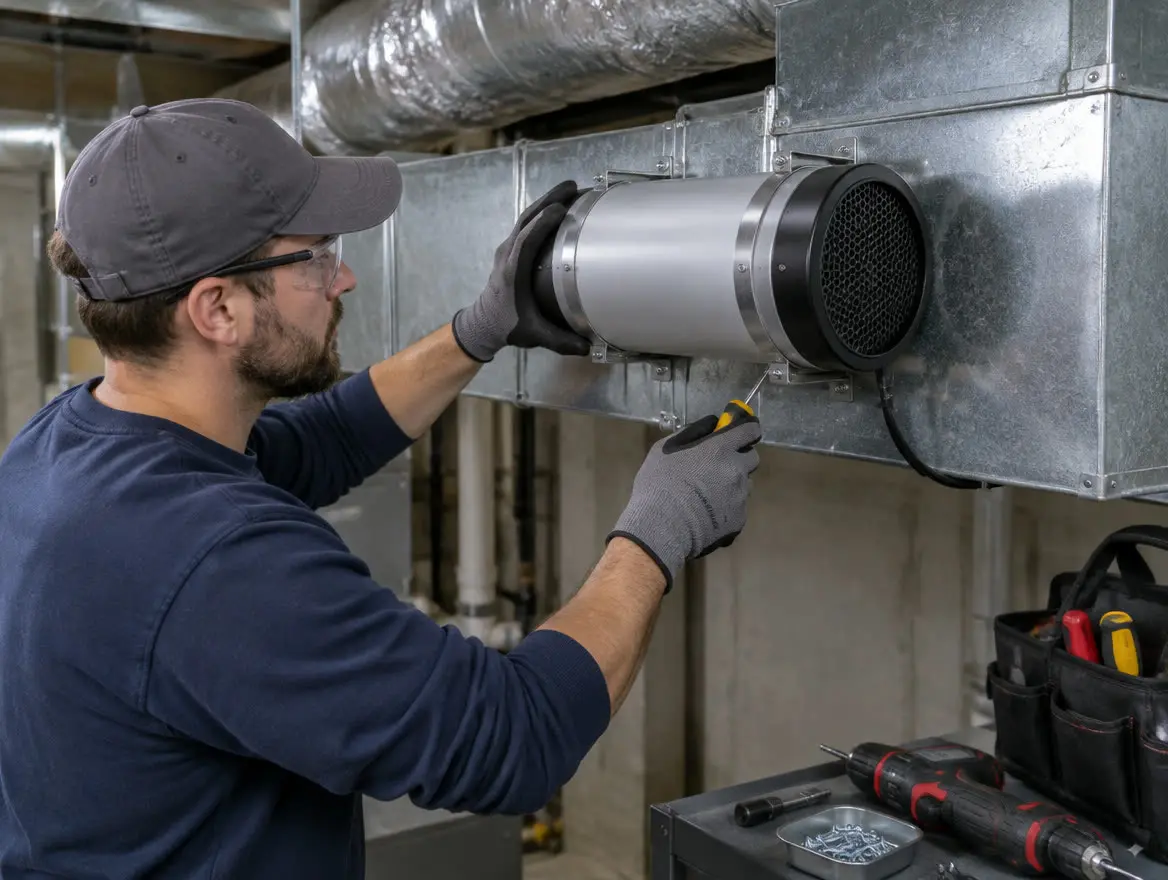
Four ways to improve indoor air quality (IAQ) in your home using your HVAC system
- Increase air circulation
- Monitor your HVAC filters
- Schedule regular maintenance for your HVAC system
- Invest in HVAC indoor air quality products
1. Increase Air Circulation
Many thermostats offer Auto and On settings for the HVAC fan. In Auto mode, the fan typically runs during heating or cooling cycles. In On mode, the fan runs continuously, circulating air more frequently and potentially helping distribute temperatures throughout your home. Continuous operation may increase energy use and, on some cooling systems, affect indoor humidity levels. Ask your HVAC technician which setting is appropriate for your equipment.
Also, this increased air circulation means that your HVAC filtration system filters the air in your home more frequently, which may help capture more airborne particles. If anyone in your home has allergies or asthma, ask their healthcare provider for guidance.
2. Monitor Your Filters
Your HVAC filter’s job is to remove dust, debris, and allergens from the air circulating throughout your home. As your filter collects particles, it naturally becomes dirty. An excessively dirty filter can restrict airflow and affect HVAC performance. Check your filter regularly and replace it according to the manufacturer’s recommendations, or sooner when conditions require it.
Your mission is to monitor your filter. As it gets dirty, change it. In the summer, when the system is running a lot, you may need to change it more often than other times of the year. This simple habit supports airflow and the effectiveness of your system.
3. Schedule Regular Maintenance for your HVAC System
Regular HVAC maintenance helps identify potential performance and safety concerns. It also gives a technician an opportunity to inspect system components for dust, debris, moisture and other conditions that may affect indoor air quality.
When we do maintenance on your system, we don’t just check the mechanical operations, but also the general cleanliness.
During a furnace tune-up, an HVAC technician should clean dust or debris from inside your furnace cabinet. The technician should also examine your blower fan to ensure it is free of any dirt, pet hair, or lint buildup. Because the blower fan controls air circulation year-round, this can affect your heating and cooling systems’ performance.
During an air conditioner or heating tune-up, an HVAC technician should also check the condition of your evaporator coil. It should be clean and free of any restrictions.
As your air conditioner cools the air, moisture can condense on the evaporator coil and drain away through the condensate system. If moisture does not drain properly or surfaces remain persistently damp, conditions may support microbial growth. During maintenance, a technician can check for drainage problems and visible buildup and recommend appropriate next steps.
Finally, if you notice abnormal smells when your system runs, this may point to moisture, a dirty coil or another issue. A technician can inspect the system to help find the cause.
4. Invest in HVAC Indoor Air Quality Products
Sometimes your existing HVAC system needs a little help to address indoor air quality issues. If you’re concerned about comfort or air quality in your home, The AC Guys can discuss IAQ products that may suit your existing system.
Options may include dehumidification and air purification, depending on your home and equipment.
Dehumidifiers
As someone living in Texas, it’s no secret that too much humidity can affect your comfort and your home. Dehumidifiers help by removing humidity from the air.
Although your air conditioner does remove some humidity, a dedicated dehumidifier may be worth discussing if humidity is a persistent concern.
Lower humidity can also make a home feel more comfortable.
The EPA recommends keeping indoor relative humidity below 60%, ideally between 30% and 50% when practical, to help limit conditions that favor mold growth. See the EPA’s guide to mold and moisture.
Air Purifiers
In-duct air cleaning systems, including products in the REME HALO family, may be considered as part of an indoor air quality plan. Different technologies have different capabilities, limitations and maintenance requirements. Some electronic air cleaners may also produce ozone or other byproducts, so product specifications and independent testing information are important considerations. Our technicians can discuss available options, installation requirements and manufacturer documentation to help you make an informed decision. Performance varies by product and conditions, and these systems are not medical treatments.
Interested in learning more? Contact The AC Guys to discuss your options.